Techstreat Solutions

Please fill out the form below if you have a plan or project in mind that you'd like to share with us.
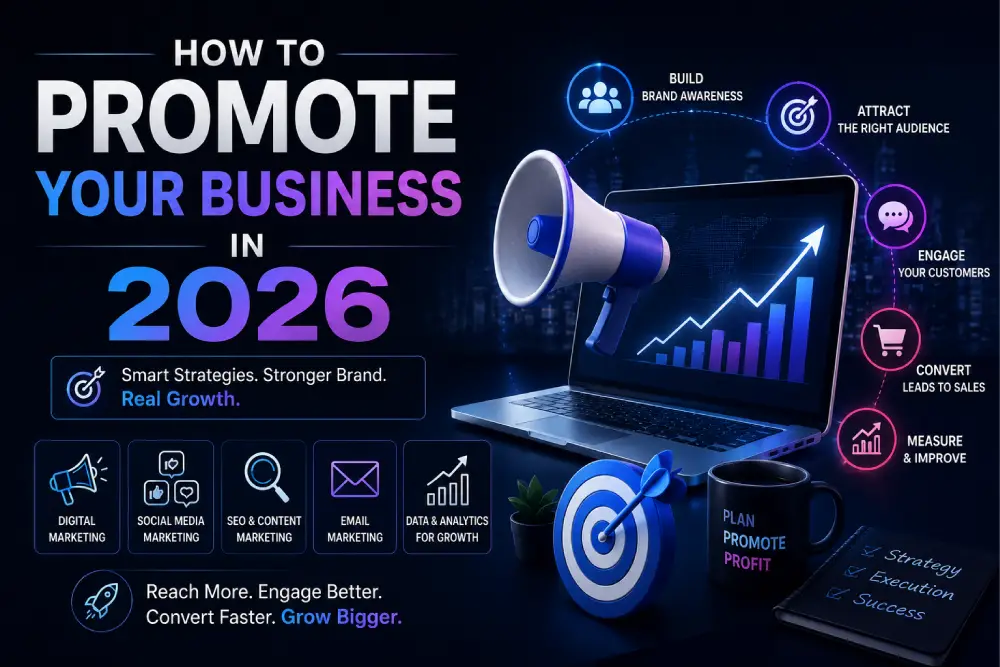
A practical SEO guide to modern business promotion, organic marketing, paid advertising, content, AI, and customer trust
SEO Focus Keywords: business promotion, how to promote your business, digital marketing, online marketing, social media marketing, content marketing, local SEO, paid advertising, organic marketing, lead generation.
Promoting a business in 2026 is not only about putting an advertisement in front of as many people as possible. Customers have more choices, more information, and more ways to compare brands than ever before. They may discover a business through Google, Instagram, YouTube, a review, a short video, an AI search result, or a recommendation from someone they trust.
The good news is that small businesses do not need a huge marketing budget to get attention. What they need is a clear message, useful content, a strong online presence, and a promotion strategy that matches the way their customers search and buy.
In this guide, you will learn how to promote your business in 2026 using practical methods that can work for local businesses, service providers, startups, online brands, and growing companies. We will also look at what has changed, the difference between organic and paid promotion, common promotion mistakes, and a simple case study.
Business promotion has changed because customer attention has changed. People do not follow a single path from advertisement to purchase. They often see a brand several times across different channels before they decide to contact or buy from it.
Your website is the home of your online presence. Social media can bring attention, but your website can explain your offer, show proof, answer questions, and turn visitors into leads. Keep your website fast, mobile-friendly, easy to navigate, and focused on customer needs.
Create clear service pages and use natural keywords such as business promotion, digital marketing services, local business services, or your specific product or service category. Add strong calls to action such as Book a Call, Get a Quote, Request a Demo, or Contact Us.
Search engine optimization helps your business appear when people are actively looking for information or solutions. Start with simple keyword research. Find the words customers use, then create useful pages around those topics.
Focus on search intent rather than repeating the same keyword many times. Write answers that are genuinely useful. Use descriptive titles, headings, internal links, image alt text, FAQs, and location information where relevant.
For local businesses, optimize your Google Business Profile, collect genuine customer reviews, keep business information consistent, and publish useful local content.
Content marketing is one of the best ways to build trust before a customer is ready to buy. Instead of only posting promotional messages, answer questions your audience asks.
A useful rule is simple: educate first, promote naturally. When your content helps people solve a problem, your brand becomes easier to remember.
Do not try to be everywhere just because another brand is there. Choose platforms based on your audience and business type. Use social media to build attention, trust, conversation, and repeat visibility.
A strong content mix can include educational posts, short videos, customer stories, behind-the-scenes content, product demonstrations, industry insights, and direct offers. Use keywords naturally in captions and on-screen text so people can understand what the content is about.
Short videos are useful because they can communicate a problem and solution quickly. You do not always need expensive production. A clear hook, useful information, simple visuals, subtitles, and a strong call to action can be enough.
For example, a financial consultant can create a video titled '3 Reasons Your Business Loan May Be Rejected.' A real estate company can create '5 Things to Check Before Buying a New Flat.' These topics answer real questions and create a reason to watch.
Paid advertising can help you reach a specific audience faster. Depending on your goal, you can use search ads, social media ads, video ads, display ads, or retargeting campaigns.
Start with one clear objective. Do you want leads, website visits, sales, app installs, or awareness? Create a focused campaign around that goal. Track cost per lead, conversion rate, quality of leads, and return on ad spend instead of judging a campaign only by clicks.
People want to know whether other customers had a good experience. Reviews, testimonials, case studies, ratings, project photos, and customer results can reduce doubt.
Ask satisfied customers for honest feedback at the right time. Do not buy or create fake reviews. Genuine proof is more valuable for long-term brand trust.
Owned communication channels can help you stay connected with people who already know your brand. Use email newsletters, helpful updates, offers, reminders, and educational content where appropriate. For WhatsApp, communicate only with people who have given appropriate permission and make messages useful rather than repetitive.
Segment your audience when possible. A new lead should not always receive the same message as a long-term customer.
Partnerships can help you reach an audience that already trusts another person or business. Choose partners whose audience matches your target customer rather than selecting someone only because they have a large follower count.
You can collaborate on educational videos, webinars, local events, product bundles, interviews, referral campaigns, or joint content.
Many customers do not buy the first time they discover a business. They may need more information, compare options, or wait until the right time. Retargeting can bring your message back to people who have already interacted with your brand, while a well-planned follow-up process can help convert enquiries.
The key is relevance. Do not repeatedly show the same message to everyone. Match follow-up content to what the person has already viewed or requested.
Organic promotion focuses on earning attention through content, SEO, social media, reviews, referrals, community engagement, and other unpaid methods. Paid promotion uses advertising budget to reach a selected audience or capture demand.
The strongest strategy is often a mix of both. Organic marketing can build long-term visibility and trust, while paid promotion can provide faster reach and help test offers. For example, a business can publish an educational blog, turn it into short videos, and then use paid ads to promote the best-performing offer.
Start with four questions: Who is your customer? What problem do you solve? Where does your customer spend time or search for solutions? What action do you want them to take?
Consider a fictional local home renovation company that depended mostly on referrals. Its website had basic information, but it received little search traffic. Its social media page mostly contained promotional posters.
The company changed its approach by creating service pages for its main services, publishing answers to common customer questions, sharing project case studies, collecting genuine reviews, and posting short videos showing renovation tips. It also tested a small search advertising campaign for high-intent services.
The important change was not one viral post. The company built a simple system: helpful content attracted attention, search visibility captured demand, reviews built trust, and paid advertising created additional opportunities. Over time, the business could compare which services, keywords, content topics, and campaigns produced the best enquiries.
The lesson is simple: promotion works better when every channel supports the same customer journey instead of operating as separate activities.
If you are starting from scratch, do not make your strategy too complicated. Use this basic framework:
Keep what works, improve what is weak, and stop activities that do not support your business goals.
Marketing does not have to be confusing. If you want to build stronger online visibility, attract the right audience, generate better leads, and create a clear digital marketing strategy, Techstreat Solutions can help.
From SEO and content marketing to social media, paid campaigns, and lead-focused digital strategies, the goal should always be the same: turn attention into meaningful business growth.
Ready to grow your business online? Connect with Techstreat Solutions and build a promotion strategy designed around your business goals.
Promoting a business in 2026 is about being useful, visible, trustworthy, and consistent. Customers can discover your brand in many different ways, so your marketing should work as a connected system.
Start with a clear audience and offer. Build a strong website. Create useful content. Improve your search visibility. Use social media with a purpose. Add paid advertising when it makes sense. Collect genuine reviews, follow up with leads, and measure results.
You do not need to do everything at once. Choose the channels that match your customers, build a repeatable process, and improve it using real data. That is how modern business promotion becomes a long-term growth strategy instead of a collection of random marketing activities.